Laboratory discipline
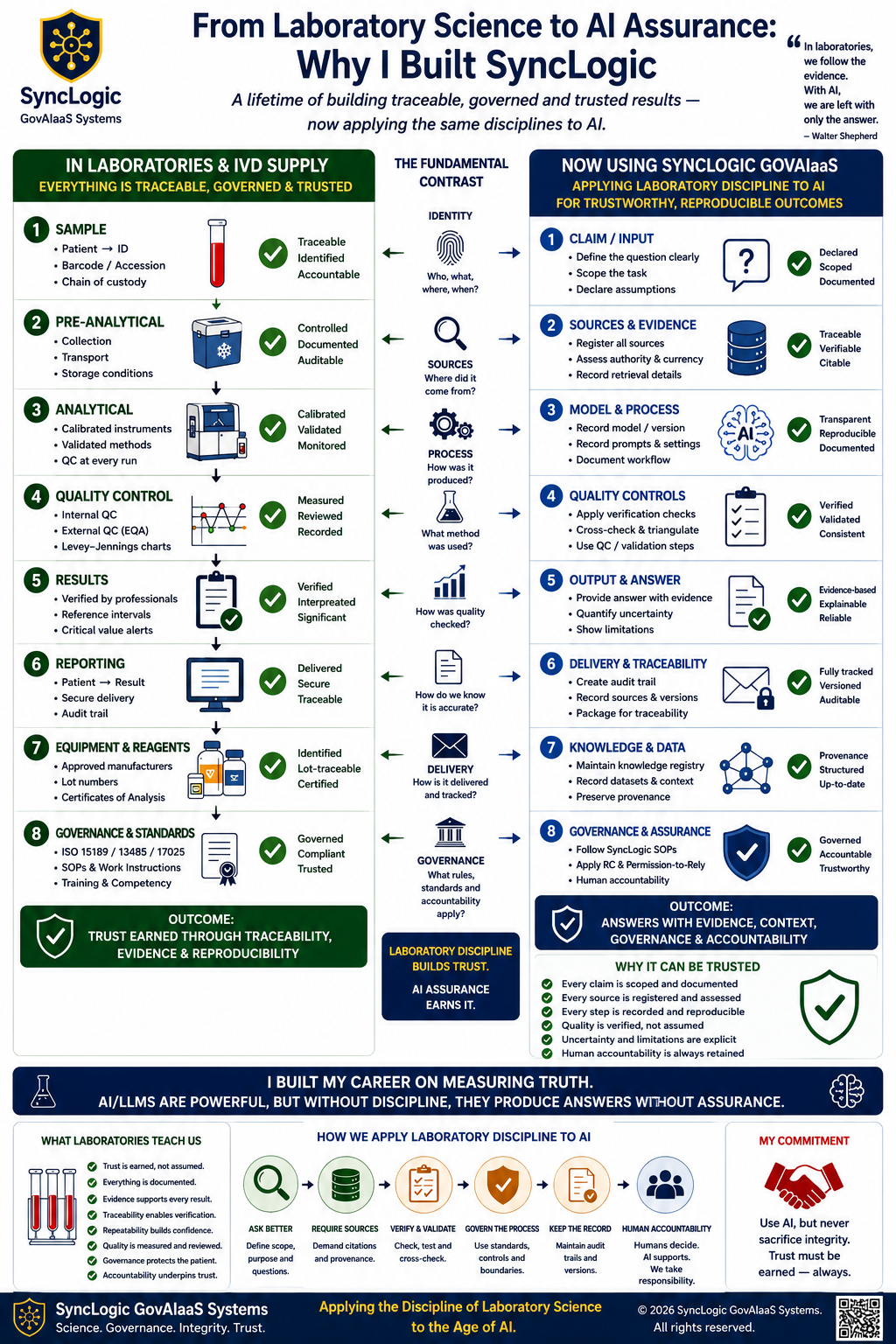
Samples, methods, equipment, quality controls and results were identified, documented, reviewed and traceable.
Why I built SyncLogic—and why books need governed AI-readable knowledge systems.
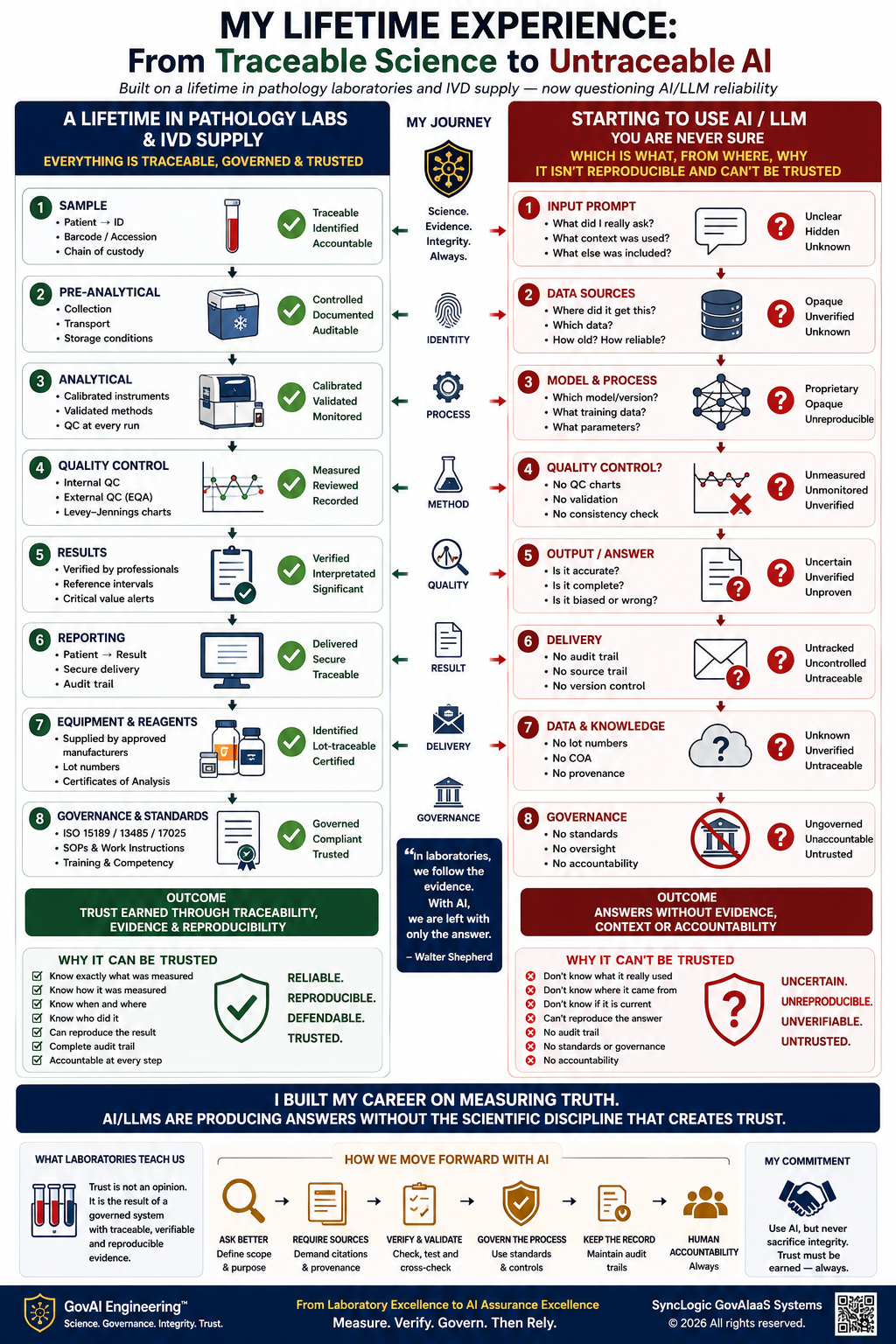
My working life in pathology laboratories and IVD supply was built around systems that were identified, traceable, controlled, reviewed and capable of producing reproducible results. Later use of AI and large language models exposed a sharp contrast: fluent answers could be produced without a visible source trail, a reproducible process or a defined basis for reliance.
BookHDI Systems applies the disciplines of source identity, scope, provenance, versioning, review and permission to the transformation of books into AI-readable knowledge surfaces.
Samples, methods, equipment, quality controls and results were identified, documented, reviewed and traceable.
AI could provide useful answers while leaving source origin, transformation steps, uncertainty and reproducibility unclear.
SyncLogic governs the reasoning and transformation chain; GovAIaaS manages assurance, uncertainty and Permission-to-Rely.
The infographics below show the contrast between laboratory-quality systems and opaque AI output, followed by the controls used to restore traceability, governance and accountability.
Readers are already using AI to explain, question and apply books. BookHDI Systems creates a controlled interface between an identified book and an AI companion, rather than leaving that transformation to uncontrolled prompting.
Explore the Book Study, Book Use and Author-Authorised AI Companion pathways—or contact Walter Shepherd about an early pilot.